The Sensate Intelligence:

The teleology of humanity’s successive bio-technological revolutions

By Tanya Kan

POL381H1

2010-02-08


Ned (to Ray): You’re missing something. Biological is what we are. I think most people would agree that being biological is the quintessential attribute of being human… and I plan to keep it that way.[1]

Single Whip Singularitarian, artwork by James Post

How can it be proven that future technological revolutions in genetics, nanotechnology and robotics can benefit the social totality and realize humankind’s teleology? Ray Kurzweil contends that future technology shall inevitably prevail against even slow institutional change to extend the evolution of human intelligence beyond their biological capacity. Although there is no disputing that the augmentation of human intelligence is a worthwhile purpose, Kurzweil presupposes that technology will be able to innovate at a steady exponential rate because of the economic imperative of the capitalist system.[2] I contend that Kurzweil’s privileging of the modern rational subject as the self-referential position that subsumes natural orientations have caused two problematic inclinations: First, that he has neglected to describe intelligence as informed by the intercommunication of bodily senses and rational thought, and secondly, his reliance on the unproven value of the capitalist system. My overarching political argument is that a phenomenological approach to technical devices would enable more progressive and humanistic technology to flourish in differentiated cultures with more ease because of its consideration for the ambiguity of human subjectivities and positions.

One of the unique attributes of a human being is his mimetic faculty[3] that influences his peers and his surroundings to a higher degree of consciousness than any other species. This supposes that he is also a “porous being” in Heidegger’s terms, where his perception is the moment of decision that differentiates and mentally designates the ambiguous sensate inhabitants of his surroundings.[4] Similarly, the output from informational technologies stimulates his rational capacity and simultaneously “the material layers of the human being: his nerves, his senses, his entire physiological substance”.[5] Our reactions to the products of new media, travel, medicine, military, and so on cannot be understood as based on technical knowledge, but also as a carnal response at the point of perception. What I am referring to is what Shaviro calls “the primordial forms of raw sensation: affect, excitation, stimulation, and repression, pleasure and pain, shock and habit.”[6] It is a kinetic relationship between the subjective intelligence that comprises of the reciprocal interaction of rational thought and sensate reflexes and takes in the tactility of the world outside of the body.[7] That Kurzweil neglects this aspect of intelligence would weaken his value-based justifications that his technological vision truly augments the collective human potential.

Indeed, there is no other blueprint for augmenting human intelligence than on researching into the continuum of our own species, and it would be a fundamental error in scientific practice to see the mind as disconnected from the body. However, this is exactly the historical basis by which we understand the place of the technical within the human society. Peter Woelert contends that, since the work of Descartes, the modern technical dominant is characterized by a gap “between a disembodied, rational subject on the one hand and a rationalized, objective material world on the other”.[8] As nature becomes mechanistically rationalized, human body follows suit because it is derived from natural causes.[9] The modern technical subject thus has ascended all previous notions of natural orientation and becoming, and it has become self-referential and an end in itself.[10] The exponentially increasing vitalization of technologies since World War II has assimilated the conceptual position of both nature and the subject into its Symbolic auto-functions.[11] In other words, the bodily subject is no longer thought of as free from technology and able to reflect itself autonomously. Woelert implies that modernity has been a consistent cultural dominant that has deprecated the evolution of the subject, even so far as to say that technology has totalized the capacity for man to know himself as only through the production of his technical apparatuses.[12] Under such formulations, there is nothing ‘post-’ humanity about Kurzweil’s political project, because it is part of a trajectory of technical rationalization that repudiates the function of nature and subject, and humanity the subject is foreshortened of its depth.

According to Marcuse, technology is always a historical-social project of specific coded values, and that its apparent neutrality is ideological.[13] Technology is not something that enables a direct perception of the world, but that it re-conceptualizes how we see the world.[14] Vivian Sobchack sees that expressive technologies are also historically constituted in altering previous forms of temporal and spatial consciousness and the bodily sense of subjective existentialism.[15] With technology of the everyday manifesting an “objective” Symbolic familiarity into the body, technology compels a loss of its own history.[16] Pushing for the attraction of the new,[17] the old is denied of its immediate precursor to the current. In other words, the multiple technical transformations of the body privilege certain perceptual dispositions while concealing other possibilities.[18]

There is without a doubt a sense of excitement and play involved with current technologies,[19] and the spectacular with the prospect of the promises of future technologies. The implications of having carnal interest with the dominant disembodied technical rationality is that a subject is simultaneously invested in both being “inside” the body and “outside” mapped onto the object of tactile desire. As such, “there remains no basis for preserving the mutual exclusivity of the categories subject and object, inner and outer, I and world.”[20] Thus in the labour of the body, there is an ambiguity and inconclusiveness to the routine authorship[21] that the capitalist system is predicated on. The senses and each part of the body autonomously have its own memories that are pre-reflective, perceived from a non-authored, uncategorized world, as it engages with work that is artistic, philosophical, and scientific.

Kurzweil claims that the free market functions as an equivalent to natural evolutionary competition,[22] but this statement only reveals his mechanistic bias that overtakes the orientation of nature as I have stated above. It is not a claim that is true by necessity. Moreover, it is problematic to see economic emancipation as the fundamental basis for social freedom[23] that is the unarticulated basis for the worldwide dissemination of such technologies. Race and gender theory has shown that social oppression can only be alleviated by equality rather than economic emancipation.[24] This is a project better taken up by phenomenological considerations that influence the technical because of the natural equality between humans on the basis of their senses and their intelligence unconditioned by social opportunity.[25] The sensorium is necessarily acculturated and situated in history[26] to enable sites of difference, a prerequisite for alternative narratives for the cultural being. Furthermore, Kurzweil’s concept of transcendence[27] is problematic because it does not offer an alternative to calculative thinking, nor does it offer the space for resistance, such as with the pre-reflective cultivation of practices that are not produced under the dominant mode of efficiency.[28] Correspondingly, Kurzweil misunderstands the function of art, which generates dialogue through affective means, rather than necessarily demanding a rational response.[29] Altogether, Kurzweil has reduced human teleology to its objective rationalism, scraping the means of play and curiosity and the imperfection of metaphoric language that is wholly engaged with the sensate body.

I have maintained in the interest of the human sensorium in the consideration of prospective bio-revolutionary technologies because of its teleological interests to the human subject. As such, threats to sensate experiences should be factored in as part of the fine-grained relinquishment of potentially dangerous innovations.  I have also contended the age-old expression that “money can’t buy everything” by privileging the complexity of the sensate body. This is because the capitalist mode of reproduction together with technical rationalism has on the whole forsaken critical exploration for marginal and “inefficient” sensate narratives. Our capacity to have meaningful experiences is not divorced from our carnal accesses through technical perception, where we “proprioceptively feel our weight, dimension, gravity and movement in the world.”[30] As technology is an ethically and politically coded phenomenon, there are many possibilities to its realization for the value of mankind that have yet to be fully determined.[31]


Cited Sources


Barry, James Jr. “The Technical Body: Incorporating Technology and Flesh.” Philosophy Today 35.4 (1991 Winter): 390-401.

Belu, Dana S. “Thinking Technology, Thinking Nature.” Inquiry 48.6 (Dec 2005): 572-591.

Kurzweil, Ray. The Singularity is Near: When Humans Transcend Biology. New York: Penguin Books, 2005.

Sobchack, Vivian. Carnal Thoughts: Embodiment and Moving Image Culture. Berkeley: University of California Press, 2004.

Woelert, Peter. ““Man” and His Technological Doubles.” Philosophy Today 52.2 (Summer 2008): 157-164.


[1] Kurzweil 226.

[2] Kurzweil 94.

[3] Sobchack 55.

[4] Barry 390.

[5] Kracauer, as qtd. in Sobchack 55.

[6] Shaviro, as qtd. in Sobchack 59.

[7] Merleau-Ponty’s elaboration on the intercommunication of the senses, in Sobchack 71.

[8] Woelert 157.

[9] Woelert 158.

[10] Woelert 158.

[11] Woelert 159.

[12] Woelert 160.

[13] Belu 579.

[14] Barry 394, on an interpretation of Merleau-Ponty’s and Heidegger’s physis and techne. 374: “modern technology, in its essence a historical decision, is the decision concerning modern perception, because it is the determination of the “how” of our perception and the “what” of appearance of it.”

[15] Sobchack 136.

[16] Barry 396.

[17] In the sense of Tom Gunning’s notion of attractions, understood in this sense for consumer culture.

[18] Barry 398 on Merleau-Ponty.

[19] Kurzweil 341.

[20] Iris Marion Young, as qtd. in Sobchack 66.

[21] Barry 398 on Merleau-Ponty.

[22] Kurzweil 94.

[23] Belu 583.

[24] Belu 583.

[25] I am evoking the state of nature as understood through Hobbesian terms, where each man is equal in their bodily dispositions (includes the brain) that they each have the equal opportunity to each other’s mortality.

[26] Sobchack, 63 and 139.

[27] Kurzweil 387-389.

[28] Belu 583-585.

[29] Belu 585.

[30] Sobchack 60.

[31] Belu 574.

[5-page essay, University of Toronto B.A. Hon, political science department]

This content is password protected. To view it please enter your password below:

Stigma: Pitch-length plot;
A young military cadet who wakes up from a medical treatment,
to find that he has inherited more powers than he reckoned,
to take down the invaders with powers that appear to be
as alien as it is drawn from the nature of the Earth.
He is given the task to eliminate the oppressors with all of
Earth’s natural inheritance in the form of bacterial evolution.
But what kind of politics did this kind of power emerge from?

Prologue

I’ve had this dream before. And each time that it repeats, it feels all the more disjointed and uneasy. For all its familiarity, each iteration makes me scrutinize the sequence for any changes, and run irrational circles in my head on what it means.

I find myself in a forest, frosted over with ice and snow. Everywhere that the eye can see, there are evergreens, crowding together like nervous guards, so that their needled branches fasten upon each other in a sudden crisp wind. The chill doesn’t bother me. My breath puffs out in a cloud, its shapes more reminiscent of jagged leaves than balls of cotton. For some reason, I am sharply amused by this activity.

An almost human-like murmur followed by a bark sounded at my heel. Two she-wolves, of proud, silver shoulders, greet me amicably. They stride about as to demand my attention. I suddenly feel chilled, then warmed, as though my senses have just woken into a different climate than the one that I have expected. My skin prickled as though with an extra layer of winter pelt.

The lighter-coloured of the two wolves raised her paw as though to strike me severely. The entirety of the she-wolf’s muscular arm swiftly metamorphosed into a crimson, gelatin mass of tubular veins as her spurs touched the crook of my arm. The coils of blood pulsated merrily in the brisk air. It seems to me as if it is working out its own patterns. And as the she-wolf tilted her head, it was as if she was humming a melody an accompaniment to the rhythm of those breathing, cellular bodies. So focused was I on the lupine beast that I only just noticed the raised bumps of my own circulatory maze in response to the visceral display.

But it was more than just a display, for a wet, pleasurable slice rioted through my veins. My own set of blood ribbons rose out and immersed themselves with the wolf’s, abject and magnificent. Immeasurable seconds brought the feeling of extra life transfusing into me, cycling and sniffing with its sidelong presence. I feel a giddy rush that made me throw my head back and see bright, coral-red networks behind closed eyelids. When my nose twitched, I am met with the scents of a feast of living things. Throughout these proceedings, the other wolf companion was sitting on her haunches, watching keenly. A momentary lolling of the tongue indicated her anticipation for the same biochemical unity.

As the blood ribbons halted in their coursing, the lighter wolf gave a wuft of breath. She has become more dimunitive, as like a newly sheered sheep. Her expression is one of sleepy satisfaction. Deep within her settlement, she will now and then flash a human-like eye within her irises. Both wolves rearrange themselves about me, folding their legs and bundled close against me. A bastion against the brisk winter and enduring solitude.

When I next awoke, I was still in the dream-world of the forest. I knew right away that there is supposed to be a third wolf, an old sire, who has not arrived. His missing presence is hangs like an omen. The two she-wolves paced wretched marks into the snow with trembling agitation. The darker-coloured wolf paused on a low hill, momentarily rendered into a gray silhouette. She looked back at me. I didn’t know what she was thinking beyond the glaze of worry. Then the world shifted.

The earth concentrated, held its breath, and FLEXED. Those trees with their roots exposed suddenly developed a metallic gleam to their undersides. The chirping of insects and small scavengers abruptly silenced, then wound up again in a synthetic, scratchy parody. The repetitious loop made the wolves flatten their ears to their skull. Gobs of spit leaked past their incisors. Where there were once peepholes and knobs in old trees, hosting a home for bees, robins, or rodents, these hideaways have been infested with gears, leaking batteries, switchboards. In a tree split along its length by lightning, wires and coiling junk froth forth. This garbage twitched in the dirt like centipedes. The ground moved as though on the back of some frustrated golem, of which myself and the other noble creatures are but fleas. Steam rose uninhibited from century-old trees. Rather than the sound of yawning foliage, mechanical rust shrieked when one of these sentinels felled.

My dear companions suddenly seem very far away. I was left looking at their backs and low, cautious tails as they ran. I chased after them, heart at my throat, with fearful anticipation making wintry distance seem all the more unapproachable.

My review on the indie game, Trauma, developed by Krystian Majewski, has been published on Indie Game Reviewer. Click here to read!

“They say that films and games have a dreamlike quality, and this strikes potent and true with this jewel. The interactive game emphasizes storytelling and visceral experiences that resonate through gradual interactive progression.” I have given this title 4.5/5 stars.

This post is part of an intricate conversation centring on the question of whether there is a unified and narrowed message presented dominantly through corporate media, and whether or not it inherently socializes subservience from top-down towards an ever highly-media saturated group of entertainment consumers. Very quickly, we find that we cannot escape from certain conceptions of hegemonic ideology. The difficulty, first, then, is in how to define a hegemonic ideology, whether it exists and in what forms and contexts, such as if there are fissures in its structure.

To start, Antonio Gramsci gives a salient Marxist perspective by maintaining that the entrenchment of the capitalist system maintains what he calls a ‘cultural hegemony’. The important details for our purposes are in his emphasis that cultural hegemony is not distributed as monolithic, but as layered into the complexities of cultural society. In other words, capitalist cultural values has become the norm, crafting expectations, priorities, and sensitivities, making certain things in the cultural sphere gain an exchange value that is exponentially higher than its use value. Where the working class have to develop culture of their own in response to the ‘norm’, the bourgeoisie culture is closely tied to the political institutions, civil culture and engagement and legal constitutional structures. In this sense, the naturalization of social constructions and institutions have aided in the emergence of self-reproducing ideologies.

There is some validity here in thinking of artistic production as necessarily always interacting and responding to types and experiences of cultural hegemony in the Gramscian sense (capitalist values as not monolithic and unified but as multi-layered and labyrinthine). Artists will often push themselves to see their work as producing not just a cultural experience, but a cultural experience which has a certain exchange value. I use exchange value in this sense to distinguish from use value (the value of something based on its utility) but take it to mean that it is the value as comparative to everything else on the marketplace. According to Marx, the exchange value of a commodity implies the ability to command limited labour, which is implicitly confrontational in a materialist sense. However, the messy part of this is that artists ought to reasonably emerge from all parts of society, from all walks of life; So too, their audiences (who should be likewise invited to produce, in the form of responses and conversations). They necessarily articulate perceptions that are not articulated by bourgeoisie culture persay, which I have previously defined as the norm, the reified, the law. The very definition of art (and even entertainment) is to move away from previous subsistence of the mundane. However, the very articulation of the mundane is at least greatly framed by a cultural hegemony. Thus, exchange value, in this sense, is often outside of the control of the living labour of the artist, leading to what I would contend is a divisiveness between pleasure derived from succeeding at a creative endeavour (self-fulfilment), and pleasure because the external value based on the appraisal of the market system “approves” of the artwork (positive alienation).

Let’s link this back to the notion of ideology. Ideology works in a manner to reproduce certain social relations and to give broad, normalized justifications for a given ‘-ism’. Althusser, for example, contends that capitalism socially constructs the concept of the individual as a subject, that is, an agent responsible for his motivations, preferences, and values. All ideological practices as such constitute an individual as a subject in particular ways. This is not a natural occurrence, but something that conserves and reproduces subjects in the hegemon’s image. I think that this theory is somewhat complicated by the inherent competition and non-unitary disposition of the “bourgeoisie”/ “big media players”. Here on in I will move away from the Marxist divisional class structure and strive to work in theories that pertain more to contextual, time- and space-based sociopolitical phenomena. Nonetheless, the Marxist philosophers have emphasized that exchange value is always being conserved and added to in a relationship of oppositions. This is at a tension with art production and discourses about art, which both seek to question and perceive in new and context-compassionate ways. In other words, if we are not talking about derivative crafts, art as practice much more readily takes the form of sharing and communication, than it is about the individualization of choices, competition, and managerial organization. Art – the vagrant, non-linear, nomadic kind – must be contorted and warped to fit the transformation and socially constructed time normalized by capitalist managerial structures and cultures.

So what sort of structure can we define as relating to (nomadic) arts? Here, I am quick to point to postmodern thinkers, whose works I am greatly indebted to. For brevity, I will not discuss hypermodernists such as Baudrillaud and Marc Augé, although their framing of non-spaces and the hyperreal (the inability to distinguish between the virtual and the real) are instructive to aesthetics in general. Where Marxist philosophy engages in a discussion of broader socioeconomic materialist historicities, which binds the artist/audience through socialization/education from top-down ideological producers, the sections below will look at art and leisure of the streets, as lived experiences, and as chronic, addictive responses and forums.

Barbara Kruger (1981): Your Gaze Hits the Side of my Face. Installation, and other agitpop objects. Click on the picture for more details (external link).

As Jean-Francois Lyotard declares, postmodernism is an “incredulity toward metanarratives”. To Lyotard, our current experience of history, memory, and events outside our immediacy is one where we find obsolescence in the traditional narrative functions of a great hero, a nearly impossible but ultimately assailable quest, and a direct line of motivation. Instead, we live at “intersections”, without preordained linguistic systems to stabilize or communicate prescriptively or descriptively without mis-appropriation. Indeed, an audience has become ever fluctuating, mobile, and virtual (the clearest case being that of a hyperreal audience in cyberspace), thereby creating unpredictability. Sometimes great movements and agency bursts through, whilst other times there are only near silences and social deficits.

Instead of an emphasis on ownership and the measurement of derivative and exchange value, the emphasis is on pastiche and context. By moving away from framing cultural goods as principally materialist, but instead focusing on its conditions of relations through time, spatiality, and affect, we gain a critical theorization of cultural objects as transformative and vernacular. Cultural objects, through the lens of postmodernity, are embedded and constantly being rewritten, overwritten, underwritten. Culture is performed in a manner that speaks through multiple modalities – it respects, transgresses, decries, suspects, laughs at, and so on (as postulated in de Certeau’s Walking in the City). And then the (nomadic) artist flourishes in these fragmentations, at the fringes where she feels most at home and can propel conversation from tidal waves of different identities, groups, and newfound civil spaces.

I do not believe that I am guilty of reification when I suggest that groups in support of the hegemonic ideal has sensed this threat of fragmentation. The exponential growth of overt sponsorship and product placement of Veblen goods is a great example of the capitalist response to nomadic artistry. A exchange-value laden product wholly subservient to the hegemonic ideal thus baptises itself in an isolated, spectacular vision, making hedonism seem like a naturalized Need-to-live. So far, it’s seen great successes, if one measures by the metric of its profitability. One can even say that it has gained crucial political support in the form of investment opportunities for formidable businesses. However, political and civil support may go in the other direction as well (depending on the particular place), in the form of art grants, post-secondary education, and the emergence of community governance and local autonomy. Even if counter-hegemonic praxis is jostled into the shape of capitalist packaging, it is constantly undergoing further renegotiation from below. This has happened in the form of public forums, street festivals, artists collective, localvores, buskers, farmers markets, culture jamming, protests against globalization and closed-door trade agreements, independent political campaigns, even more passive-aggressive trends such as democratic deficits and low voter turnout. As postmodern cultures become more prevalent, I believe that the artists and the artphile shall jostle back against the binds of necessitating interactions to mere currencies. In fact, I believe that they’re doing so already, slowly but surely.

My warmest thanks to Gordon Frederickson (@midmotion) and Jeff Resnik (@jeffresnik), friends and forward thinkers, who were willing to put so much great ideas and tangents into open conversation. And yes, all of the earlier part of this conversation all took place on Twitter. I am at @tonedarklights and I welcome you to join us!

References:

  • de Certeau, Michel (1984). The Practice of Everyday Life. University of California Press.
  • Jay, Martin (1986). Marxism and Totality: The Adventures of a Concept from Lukacs to Habermas. University of California Press.
  • Lyotard, Jean-François (1979). Introduction to The Postmodern Condition: A Report on Knowledge. Online Source: Uppsala University.

My review on the educational game, The Curfew, developed by Littleloud Studios, has been published on Indie Game Reviewer. Click here to read!

“Imagine being armed with all the skills you need to explore a city and its secrets from the very start of the game. The Curfew puts you in the position of an unnamed protagonist who has to protect valuable information that may potentially bring down the tyrannical Shepherd Party government.” I have given this title 3.5/5 stars.

My review on the indie game, Cat and the Coup, developed by Peter Brinson and Kurosh ValaNejad, has been published on Indie Game Reviewer. Click here to read!

“Despite the imagery’s perspectival flatness, the actual experience of the visual scope is labyrinthine.” I have given this title 4.5/5 stars.

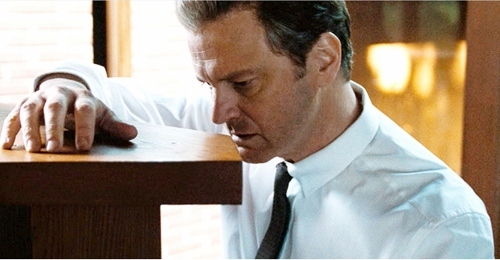
Director: Tom Ford
Writer: David Scearce, Christopher Isherwood
Stars: Colin Firth, Julianne Moore, Matthew Goode, Nicholas Hoult

My one-paragraph take: At the cinema, there’s no equal that can generate in me intensities of incoherency and stunning clarity all at once. Every frame of the film is meticulously thought out, but moreover, felt out, as though the camera caresses both what is in front of it and that which remains momentarily off-screen. The pacing is incredible, like taking deep breaths but rolling inexorably like storm clouds taking shape. One watches and becomes drawn in to the inner space of the protagonist, Professor George Falconer, who is overcome by a conflagration of many memories, thoughts, and emotions. We feel him weighing his words with the complexity of histories and connections. It is beautiful, poignant, humanistic. It is something sacred and true to heart, true to life.

It’s quite the fine moment to realize that I’ve just experienced one of my favorite films.

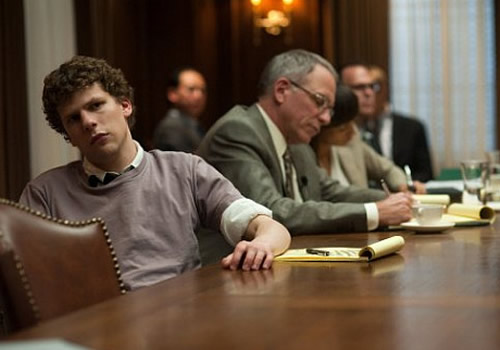
Director: David Fincher
Writers: Aaron Sorkin, Ben Mezrich
Stars: Jesse Eisenberg, Andrew Garfield and Justin Timberlake

My one-paragraph take: The Social Network comprises of witty and fascinating storytelling, particularly due to the quick lines and the pacing of the settlements. At its heart, it’s a story of friendship and its fragility under the unenviable pressures of better connections and profit. The cinematography and the editing are brilliant and coherent. We really see this in action when the editing matches Zuckerberg’s frenzied programming talent when he cobbled together the Facebash.com. Jesse Eisenberg as Zuckerberg was an intense, unrelenting performance, crafting a character that effectively courts both my contempt and sympathy in multiple successions. This was a portrait of Zuckerberg that isn’t out to vilify him, but shows his uninhibited determination to get what he wants, with the intellectual capacity and belligerence to see it to its end. He is the antihero par excellence of our decade. No one really leaves The Social Network with their initial reputations unscathed – Harvard University’s elitism perhaps the most irreconcilable negative portrayal of all – and perhaps that’s just the point.


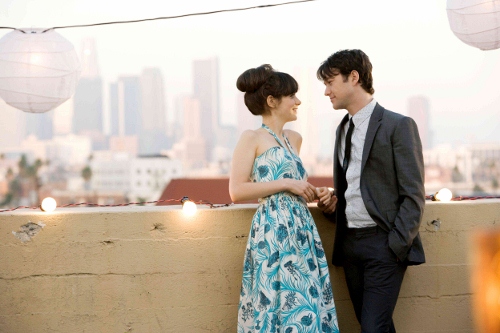
Director: Marc Webb
Writers: Scott Neustadter, Michael H. Weber
Stars: Zooey Deschanel, Joseph Gordon-Levitt and Geoffrey Arend

My one-paragraph take: I keep expecting melodrama considering the number count on the days “left” with Summer, and Gordon-Levitt’s well-nurtured dumped and decrepit expressions. In a good way. But I’m glad that this expectation did not borne itself out. Both Deschanel and Gordon-Levitt were charming and comfortable with each other, and their characters’ courtship really grew on me. The quirks and the impromptu scenes of falling in love were wonderfully heartfelt, from the happy-dance to the Ikea to the especially nifty mockumentary intermission, which actually made me more involved in the characters even though it interrupted the existing film aesthetic. The climax felt alien and jarring and leaves open many questions. Indeed, the film’s refusal to offer not some overarching grand moral narrative but snippets of experience made the narrative all the more consequential. The cinematography was lovely and familiar, so much so that I rewinded on a few occasions to see if I recognized a building or a landscape. Perhaps it speaks very much to the careful craftsmanship of this film that I felt like I could be in Tom’s shoes, where his perception of that significant other ignored the grayer points of reality. Worth seeing for its meandering and sensible storytelling alone.

In hindsight, I had a lot of fun new experiences in the last month and a half. This was despite my developing minor but chronic medical complexities since January of this year that lend itself to a whole host of stresses. Two months and a few days ago, I joined EVE Online after very inconsistent or indirect gaming experiences for years and years, such as logging into MUDs for socializing with old friends (that’s text-based multi-user dungeon for you folks playing Crysis on Ultra mode) and watching my boyfriend play his PS3 titles.

In fact, I knew what I was getting into when I was joining EVE Online. I had meant to play the game because I was thrilled by its portended difficulty. Also, less than two months after establishing my account, I would’ve completed a 45 page essay on EVE Online’s game interface and interactivity towards my degree in Cinema Studies. This was a few weeks ago. Now, looking back, the ache of the stress over academic pressures and the debilitating lack of self-confidence had faded almost into nothingness. Not just for this one paper, or this one class, but now I look back over the course of the last year and I think to myself: Wow, I did that. With the guidance and the kindness of many people, I have played hard and I have worked hard.

I had read a lot of articles about EVE before ever starting out on a trial account. Thus, on the thirteenth day, I was gutsy enough to be the last writer to meet the deadline for the 17th Blog Banter presented by CrazyKinux, where each of the eighty participants addressed the topic of how women have engaged with EVE Online, and how EVE Online ought to engage them in turn. With my modest knowledge amounting to an entry of nearly 3,000 words, and where other players may have far more in-game experience and astute writing background than I, CrazyKinux must’ve had his work cut out for him! Somehow, I have managed to find myself in his top ten winner’s list. My heart skipped a beat and butterflies (or frigates!) tickled my stomach when I read his announcement of the winning entries:

  1. The Ghost Report: Eve Blog Banter: The Girls Who Fly Spaceships
  2. “Prove It”: Women In EvE
  3. Blog Banter #17 – Women in Eve
  4. The Ladies of New Eden (An Analysis on How Men are not from Mars, & Women are not from Venus)
  5. Cloaked and Watching You: The Ladies of New Eden
  6. Space Broker: Gal-Ristas!
  7. Tech 2 stilettos
  8. It’s a woman’s world (they just don’t know it yet!)
  9. Ladies of New Eden
  10. Lady Vengeance, Or: How I Learned to Stop Worrying and Love the Pew-Pew

And a list of recommended reads:

CrazyKinux pronounced that it was near impossible for him to designate who is actually ranked #1, and whom #10, because of the complexity and expansive style and content of all entries. Regardless of where I am placed, I am honoured to be mentioned at all in the 10th spot, on the same list as the talented individuals above me. There is much that I would like to learn from the diversity of style, humor and experience that these and other entries exemplify. The lovely thing is that creative activities such as this generate continual discussion, from forums to TeamSpeak to commenting on other blogs, and are furthermore written by individuals of differentiated interests and backgrounds. After all, I take the attitude that games do matter, even when actions taken within it appear to only affect a self-sustaining alternate universe, with a certain set of rules and premises for conventional behavior. Indeed, they help us build connections between peoples and ideas, both in mundane and exceptional actions in our lives.

Rain Coehati, hailing from the new corporation that I’m now part of, Eve University, asked about our insights into how we can productively generate more interest for female gamers within E-UNI and the game as a whole. She had recommended us to read this blog post by a fellow female capsuleer for CrazyKinux’s blog banter to guide our discussion.

I responded, in my usual wordiness, to Marta Marchesi’s post. My response is a good summary of some of the new insights into this debate that I’ve discovered into my 3rd week playing EVE Online, thus also an updated supplementary to my original post for CrazyKinux. Here is what Marta said:

“The Uni, I think we’ll agree, is a unique entity in a unique game environment to begin with, and perhaps asking this kind of question from the inside may be a bit preaching to the choir, as the people who blow through here are precisely the ones who are slightly more advanced along the social scale than the average cro-magnon web person, as opposed to the rather less hot-house cultured players the Uni doesn’t let in so often.

Yes the game itself is daunting, and indeed I wholeheartedly agree with assessments that it takes a special kind of person flat out period to play Eve over the other MMO choices. And maybe I fall into that category because I do love it, and appear to dissent with a lot of the suggestion that the lack of avatar is a big damn deal in Eve. When I started, it was DARN REFRESHING to not log in and see seven billion rather less-than-realistically armored, big busted, wide hipped, pouty lipped lingerie models swinging the weapon of choice about.


Yes some people do use gender to manipulate others for benefit, but (and no I don’t presume to speak for myself but) guys, some days we just want to be treated like, well, you. Unless we ask for it.

And that, ladies and gents, is Marta’s Quick Feminist Rant of the Day. Or something. No, I don’t claim to speak for anyone else, and yes there are probably contradictions mashed up in there. Deal with it. :p”

My response –

I had truncated the quotation from Marta’s to the main paragraphs that I wish to respond to, given my limited experience of EVE so far of less than four week’s time (and haven’t run across as much misogynistic attitude as can be feared). And, also, I’m writing paragraphs right back at ‘cha. Despite that your post doesn’t claim to speak for anyone else, I find myself agreeable to many of the points made.

I had, indeed, joined the University after some investigation that I won’t be treated too differently as a female gamer, and that all the initial shock-and-awe would be only done in harmless jest and even a bit of clever irony. And that difference could be particularly articulated as: that I am in extra need of protection, that I’m easier to manipulate, that I’m only online because I want to provoke anyone, everyone, with my mysterious feminine wiles upon the blameless massive population of men who don’t know better to fend off such seductions. That’s the contradictions of the mainstream, chest-beating hypermasculinist discourse, and I can say that I’ve experienced all of these things in games and on the internet more generally. I’m not saying that all masculine discourses are this way, however, but that there is the likelihood of this being imitated more often in some circles than in others. If anything, the first impulse I had to look into the University is the association with academia and learning, even by name and by theme, if not by form, would generate a sanctuary of kindness. And I’m happy to say that EVE University has more than delivered, since my initial hypothesis.

I really like how EVE Online is so varied in its tactics too, that results can often be unpredictable, and it has very little to do with who has the faster controller or twitch reflexes. I find it rather perturbing that, in order to gain a larger female audience, it has been suggested that the game should be made more complex, more fuzzy around the edges of the established “realism”. Good god, no. The entirety of the existing fan base won’t like it, and furthermore you wouldn’t like the women who are lured by the new oversimplification of a game as pure sensationalist, “casual” entertainment. You’ll tire of them if they can’t offer anything constructive, and you’d want to send them back like those exotic dancers at Jita, because they can only do one dance even after so long. I am making a bit of fun at the utilitarian spirit alive and well in the community, of course, by my rhetoric is this: Why bother running through this whole meaningless, idealistic exercise of dreaming up a more casual, hello-kitty theme when it’s such an overtly zero-sum gain?

I had also submitted to CrazyKinux’s blog banter in my second week with my post here.
The premise of the argument that I made here is that there is that EVE Online’s form can be reducible down to a very specific type of competition – one that is guided by an industrial military complex. Women have been absent from – perhaps even exploited by – this form of competition for most of history. But it would be absolutely false to say that women don’t have their own forms of competition that are both fun and challenging (even emotionally charged) for us. Social competition is a necessary historical prerequisite for women to access the capital involved in the military industrial complex. To explain the argument’s implications: I am not saying that this way of competing is the right or wrong way, or a better or worse way. I’m just saying that this way is more familiar. To make networks, to debate about the values and characteristics of such networks that has no direct correlation to the military, territorial basis, and to vie for the best of these networks through a value system that is based on encounters rather than use value and exchange value… these are the “subjective” trends of social competition of the feminine (the subjective is in quotations because the feminine subjectivity is often seen in opposition to the male objectivity, and disregarded from professional public discourse as such). This explains why fashion can be important to network-making, all the way to why women seek social communities (such as games) in groups more often then men.

I want to extend the above argument further. I believe that there is a subconscious ideology that says: women are meant to stay away from the competition of the military industrial complex and all the imagery that is associated with it because that’s the way we are, biologically and naturally. It has taken a lot of unraveling of assumptions and predispositions of what society-at-large has told me what I can and cannot do. I don’t think that it’s by any coincidence that the women I’ve come across in this game are all forward-thinking, and doesn’t shirk from the notion of feminism as some kind of an outdated paradigm (“all genders are equal today! It’s the 21st century!” Not.), or something associated with angry, sexually-repressed bitches. We’re really different people, each of us, but I think what is common amongst all of us is an irrepressible curiosity, especially since military-based competition typically would not come “naturally” to us. As for my curiosity, I am not saying that the military industrial complex is the best, the ultimate telos of humanity, but I want to explore both its potential creativities and its inherent problems, to better face the day.

I’ll wrap this up with an anecdotal opinion. Teamspeak is… interesting, but also very ends-driven. Why does it have to be that way? It made me aware of how much I wanted to ask about the people who wanted microwarpdrives, or a certain fitting of their ship, or certain strategies during wartime. What drew you into the game? What’s your philosophy on surplus values generated from the home planets of mortal citizens while you yourself have immortality (in reference to the Tyrannis expansion)? What do your kids think about you playing internet spaceships, do you think they’d be interested when they’re older? You sound very eloquent in your lecture, what degree do you hold? But I held back these mental questions that I would otherwise ask in forums. These are questions of curiosity, enabled by the desire to maintain networks that has no prerequisite other than the enjoyment of the encounter of ideas.


This is how they measure up in expectant conveyance:
Angelic faces and cadaverous limbs,
In a hall wide with strangers,
Made more cavernous
By the mirrors of censorious apertures.
There’s always one that stumbles, forsaken:
The sweat coalesces on her neckline,
Melding with bone,
Skipping skin.

Painted over,
These laminate eyes
Give off an exotic sheen.
The garb speaks over their silence,
Shorn the broadest-shouldered of their vigour.
Bow-docked girls imitate them in a gaggle,
Carnivorous tones and grasping eyes,
Skipping stones.

The red has not yet dried,
Yet the grievances of politeness gathered
Into an uproarious applause.
The complexion of their faces all
Meld into one shade.
Another dissipated figure drapes forgery
In so much non-fulfillment.
When would each their skeletal gaze embrace at
Skipping nothing?

The sudden flurry of shared experiences within a game community must be one of the most unpredictable and satisfying things to be engaged with. When it’s a game that’s as prolific as EVE Online, with in-game politics as well as fan-made blogs, guides, databases, and creative media, these vast networks of internet media become the overall EVE Online identity to those who are familiar with the game as well as those who are not. Case in point, this very blog post is part of a network of 79 other blog posts responding to CrazyKinux’s EVE Blog Banter contest on the Ladies of New Eden. The questions posed to all blog participants are as follows:

What could CCP Games do to attract and maintain a higher percentage of women to the game. Will Incarna do the trick? Can anything else be done in the mean time? Can we the players do our part to share the game we love with our counterparts, with our sisters or daughters, with the Ladies in our lives? What could be added to the game to make it more attractive to them? Should anything be changed? Is the game at fault, or its player base to blame?

Despite the immense pools of existing talent, I will still consider that the low female demographic in the game is a loss to the diversity of opinion and politics within the game (Oops! Rather daring of me to say so, huh, right after citing CrazyKinux’s extremely diverse blog banter! My faux pas). Working towards drawing more female players will further diversify the careers and tactics that are at the disposal of all players, and experimentation amongst players itself may bring about new careers. I must stress that this is not an essentialist argument that says that women seek entertainment in fundamentally different things, and thus attempting to gain female gamers would completely eradicate all that EVE stands for. Rather, I would argue that women can be thoroughly engaged by the interplay between entertainment and creativity, leisure and competition that EVE has. But the devil’s in the details, so I will discuss some mechanisms that will enhance the game’s experience, rather than reform it.

And, despite the funhouse mixing of movie titles in my header, you may be able to tell already that the tone of this blog post is gently didactical. However, I also hope that it engages with my personal anecdotes and observations as a female gamer. Although theoretical at times, I hope that you get something out of my writing and continue this seasonal conversation. Feel free to jump around to different sections of the blog post, as the first few lines in each section should be fairly self-explanatory.

Personal attachments: I started playing just thirteen days ago. But I had been immersed for a couple of months before in the fan-made and CCP-made videos through Youtube, and browsing through the wikis to get a glimpse into the scope of the game. There was something that seemed different about the level of commitment that EVE Online machinima compared to that of other videogames: its nitty-gritty level of social and political negotiations and maneuvers between real players had me at the edge of my seat. I held out for a bit, and then curiosity got the better of me.

One of those tipping points was my gradual awareness of how much creative and technical writing has had built up the world of EVE Online. As a budding roleplayer and creative writer, having a community and developer interested in the lore of the world is a huge selling point to me. A hearty narrative also simultaneously functions as respite and as motivation in most games. I was not disappointed when I started my first days as a capsuleer: early career quests already cited the Caldari-Gallente conflict in its pre-written dialogue, while folks on public channels kept recommending me to sites within the broader EVE community.

The second selling point for me was that I heard how challenging it was, by just the game mechanics itself. I had always wanted for something unconventional and tactical, and it delivered in spades. Within hours, I became really enthusiastic about the ingenuity of the click-to-fly system rather than wobbling about in space by pressing the arrow keys. Of course, it allows a whole variety of fittings for items that can be specialized towards certain tactics based on distance and speed. Furthermore, it allows me to think of what I want to do with all that adrenaline at the moment of engagement. I can plan, coordinate, follow orders, remonstrate and call for diplomacy with my enemy. What a maddening mess it’d be if blob battles contained tens of thousands of ships that veer in all sorts of direction and can’t calibrate their distances and speeds for the optimal damage and tanking? The lucid number of menus only made it more immersive for me – as though I was simultaneously in the field of battle and engaging in combat remotely. The screen itself was the world of reality, and it was a good, strong feeling to be had.

Of clothing and of creed: I’m going to get momentarily philosophical here (posthumanist, if you were wondering). Perhaps not everyone is comfortable with the experience of associating deeply with machines. In my case, I feel materially connected to the screen as though they are my eyes, looking out towards the ship that I own, as though I am controlling it remotely from hundreds of thousands of light years away. In a way then, the screen of my eyes is traveling at superluminal speeds to give me information to react to so quickly. At the same time, I am interactively associated with the hidden character within my pod, which obtusely only becomes visible to another set of eyes – my enemy’s – when I get podded. Perhaps this invisible body is something that is more uncomfortable to women than to men, because women are asked to reify their bodies all the time, and their bodies are inscribed with extra meaning many times over. Because of this, women may be more ambivalent about relating to technologies than men, who has had a historical comfort, if not hegemony, in interacting with technological apparatuses. But I will not pursue this line of inquiry any further, for it does not productively give us an understanding of what should be accomplished to bring more female players aboard EVE Online, but only gives a hypothesis of why females may have been avoiding it at a subconscious level.

Neither do I want to jump immediately into the disposition that Incarna will draw more women gamers because of increased customization and fashion and having a body, without a broader framework to support this argument. I’m rather skeptical of stereotyped values. The above opinion is rather frivolous without basis, because there are undoubtedly female gamers who do care less about fashion and socialization, and this opinion is unproductive as to the broader type of innovation that CCP should bring to EVE while allowing it to remain quintessentially the same product that we love. Like the idea of it or not, Incarna shall come to be implemented in EVE Online. The question becomes, what sort of supportive infrastructure both in-game and within the internet community can help EVE flourish in a way that attracts productive and diverse women gamers?

I have no notions that there needs to be equal representation by people of different race, creed, gender, and religion in EVE. Not only is that an impossible ideal for any game, but it is also a fairly useless one to aim for. Difference will never be measured in equal numbers. Rather, what I am interested in is the diversification in ideas, of subjective intuitions that are as differentiated as our real life experiences. This generates discussions and tactics as never before, because the discourse of differences intermingled together creates simultaneously inclusion and dissimilarity. Women may very well respond and enact competition much more differently than men. Having more women in no way makes the game more ‘balanced’ – but in fact it will unsettle and make outcomes more unpredictable than ever. The existing EVE community would have to take on new negotiations and schemes to meet the expectations of their female corp-mates and enemies. Is that not thrilling? The EVE community has always touted itself to be the most difficult of all games, so I hope that it is not just hot air when it comes to treading readily into unknown territory of differentiated engagement.

There is a Ph.D. of Economics on the CCP staff who makes quarterly reports on EVE’s virtual economies. Blogs discuss whether corporations in EVE are realistic to real-life corporations, if they are business partnerships, or even the feudal hierarchal model. These characteristics are not necessarily fundamentally more impressive to men than they are to women. Similarly, investing strategically in multiple regional markets in New Eden is not intrinsically less creative than manufacturing outfits for Incarna. The main difference, I contend, is in the form of the competition. The markets may be measured by your margin of profit for your success, but the thrill of fashion design remains a more subjective competition.

Must we always compete?: So we’ve just entered the heart of my argument, which claims that the corporate mentality of competitive capitalism in EVE Online is a very masculine enterprise. That’s not to say that women can’t get into it because it’s masculine, but it is associated with the industrial military complex writ in large has historically privileged a masculine ideal first, and had been sustained by it. So, female players, who are aware that there is a certain masculine association with the art of war and the industrious stockpiling for war, may find themselves putting EVE Online down onto the “maybe I’ll join later” list.

There’s a multivariate solution to this:

  1. Create a niche economy that has nothing to do with competition and military strategies, not even like mining. This can include developing for stations, entertainment and fashion, for planetary interaction and other things that are not measured by strength but by a more subjective measure of trend-based products.
  2. Advertise discussions, creative writing, and media creativity by the developers and fans alike across multiple platforms.
  3. Integrating forums as a space of discourse within the game client itself with more streamlined functionality than through the in-game browser. Include methods of following and subscribing threads and PMing specific players within and outside of the game client, and by removing the word limit if possible. Make it easier to read for an extended period of time with white on dark or dark on white text and background (not grays). CCP may have been working already towards the direction that I am thinking of, with EVE gate in the next expansion to facilitate the networking aspect.
  4. Advertise different career paths beyond mining and combat (I’m looking at you, you gorgeous Butterfly Effect trailer, as much as I adore you) on Youtube and other sites heavily frequented by gamers.
  5. Install more mechanisms for group engagement such as a directory for public channels, an easier-to-read channel window, and more streamlined function and less lag for having text conversations through this medium.
  6. Incarna as the means to facilitate casual engagement, rather than necessarily focusing on dress and customization, but more as a smooth-running, chill-out zone.
  7. Promoting the crafting aspects as tied to its narrative aspects and roleplay potential.

In the next section, I shall detail some of the threads of thought of one of my broader suggestions from this list.

Planetary Folksperson Interaction and other curious inspections: Remember that there is something that is expanding the EVE Online world before Incarna, and may change the interaction of exploration yet again? Planetary interaction may also draw more girl gamers who have always wanted to fly somewhere to explore new planets and go into low orbit to observe curious new species and cultures, rather than rocks and ships.

Has anyone played the single-player PC game entitled Black and White? Maybe there’s something that can be taken from the page of that very unique game, and one line from the Sim City franchise. How are the people on planetside going to react to a capsuleer whose body is immortal, and takes their natural resources? Should they get a cut to keep them happy? Would they work more to your benefit if you pay for using such resources, or will they be militant in their labor demands? Are they religious? Should you institute a religion to keep them in line, or to aid them in a network of shared faith with other planets and societies? Can you learn trades from the peoplefolk towards working in Incarna space stations? Where else am I supposed to know to distinguish the mind-altering boosters from the girly cocktails? The Servant Sisters of EVE epic arc really didn’t go into that particular detail…

Speaking of exploring mysterious things, what if wormholes were more tied into the canon of storylines and mission running, even with the threat of that space closing up? Planetary interaction as also not neatly fitting into the calculus of pure profit margins, but also depends on your politics and ideology. Maybe ganking in lowsec does not fit into the same moral framework as indentured labour of a whole planet or dealing with pollution spillovers, since the capsuleer you’re ganking is immortal, anyhow. Maybe it doesn’t. Whatever the reason, it offers broader play styles and choices that may not be directly reducible down to military superiority or profit margin.

The naiveté of MMOs: MMOs are still in some ways in their infancy, and the visual MMOs that we associate with today have only had slightly over a decade of innovating the styles and gameplay that we’ve become familiar with. A lot of us still chose our games based on social aspects. This is a positive thing. The less positive would be that more casual players are more likely to chose games that appear social, such as upon a networking site like Facebook, or due to their popularity, or because they have great avatar customization. The latter especially shows how easy it is to slip into the trap of thinking that a game has a great community because no two avatars look alike, and therefore everyone can retain their individualism and let their personality burst forth.

Genre is also a deal-breaker for some, but at the end of the day, genre is not nearly so important as gameplay and the social experience that you get out of playing an MMORPG. If you don’t look after the truly social aspects of your game experience as the one that you feel is the most satisfying, why bother with an MMORPG at all? A console single-player would likely have better graphics and better immersion. I am no sci-fi buff, but I like it enough that it is a truer fantasy for me to fly a spaceship than to be a night-elf. But if there is no such thing as corporations and the institutionalized potential for meeting like-minded capsuleers, I may have very well let my trial time run dry without subscription.

The primary way to solve this would be through diverse marketing, and to let the game players mature in their viewing and interactive strategies. It’s comparable to the advent of film, in a way, that audiences will grow to be more sophisticated over time. Encouraging EVE’s player base to continually generate more EVE-related content can only bolster the interactive strategies that potential new players may come across, and take time to immerse him or herself in.

Diversification, or: It only does everything: CCP has been working towards the direction of inclusivity all along, but never at the behest of its original world. With Dust 514, the FPS players and those that want to joystick their ships will get their taste of on-the-ground battles, they way they like it the most. But it is more than just profiting from the market for CCP: it is tooted to add a whole new dimension the beautifully coordinated sandbox that we love so much of EVE. Dust is like a direct response to the Halo machinima Red vs. Blue, where the soldiers don’t know their own backstory and their own origins. FPS fighting in the sandbox (an FPS/MMO hybrid), tied to EVE Online, certainly expands the range of impact as well as the lore of the world, connecting many diverse forms of leisure and entertainment together.

As you can see, I’ve moved away from the paternalistic notion of “how can we market this towards the girlies” to “how can we diversify and enhance what is already at the heart of EVE’s characteristics”. Maybe with all this diversification, we’ll see a new class of ladies who are the ones to establish themselves in null-sec while sending their boyfriends into the plucky battlefields of Dust 514. Here’s to seeing things flourish.

Please take a look at some of the other entries in Crazy Kinux’s Blog Banter!:

Sorry, No Pink Spaceships Here Please
EVE Blog Banter: Chicks ‘N Ships
The Girls who Fly Spaceships
Is eve a man’s world? – blog banter
Blog Banter #17: The Ladies of New Eden
CK’s Blog Banter #17: What women want…
Blog Banter 17 – The Female of the Species

My follow-up to this topic into my third week of the game is available here. The post is entitled “Lady Vengeance returns: A roundtable about women at EVE University.”

Contest results: I am happy to announce that my entry is part of the top ten award winners of CrazyKinux’s 17th Blog Banter. Results were posted on his site on June 14, 2010, and can be viewed here.

Good luck to all entrants, and thank you for reading.

Best Regards,

Marceline Nantakarn